

You want intentional family time.
But you don’t know where to start?
What do you talk about?
How do you keep kids engaged?
What if they tune you out?
What if you had a system that did the planning for you?
You get:
→ Beautiful Canva presentation template (10 slides, fully editable)
→ 52 Words of the Week (respect, boundaries, kindness, integrity, perseverance, and 47 more)
→ Discussion questions for each word (no more awkward silence or scrambling for what to say)
→ Everything you need to start THIS WEEK!
Just customize with your family name, pick a word from the bank, and present.
That's it.
INTRODUCING
THE FAMILY MEETING SYSTEM
A complete, done-for-you system that takes the guesswork out of family meetings
It's a full year of family meetings — planned, designed, and ready to use.
Why a visual presentation works:
Kids actually pay attention when it's on the screen.
When you're just talking, they tune out.
When there's a presentation, they listen.
Plus:
You stay on track (no rambling or forgetting topics)
Kids know what to expect (less resistance)
Works for all ages (5-year-olds to teenagers)

This is what I use with my 5 kids. Even the teenagers participate.
What’s Included:
-
10 professionally designed slides, fully customizable
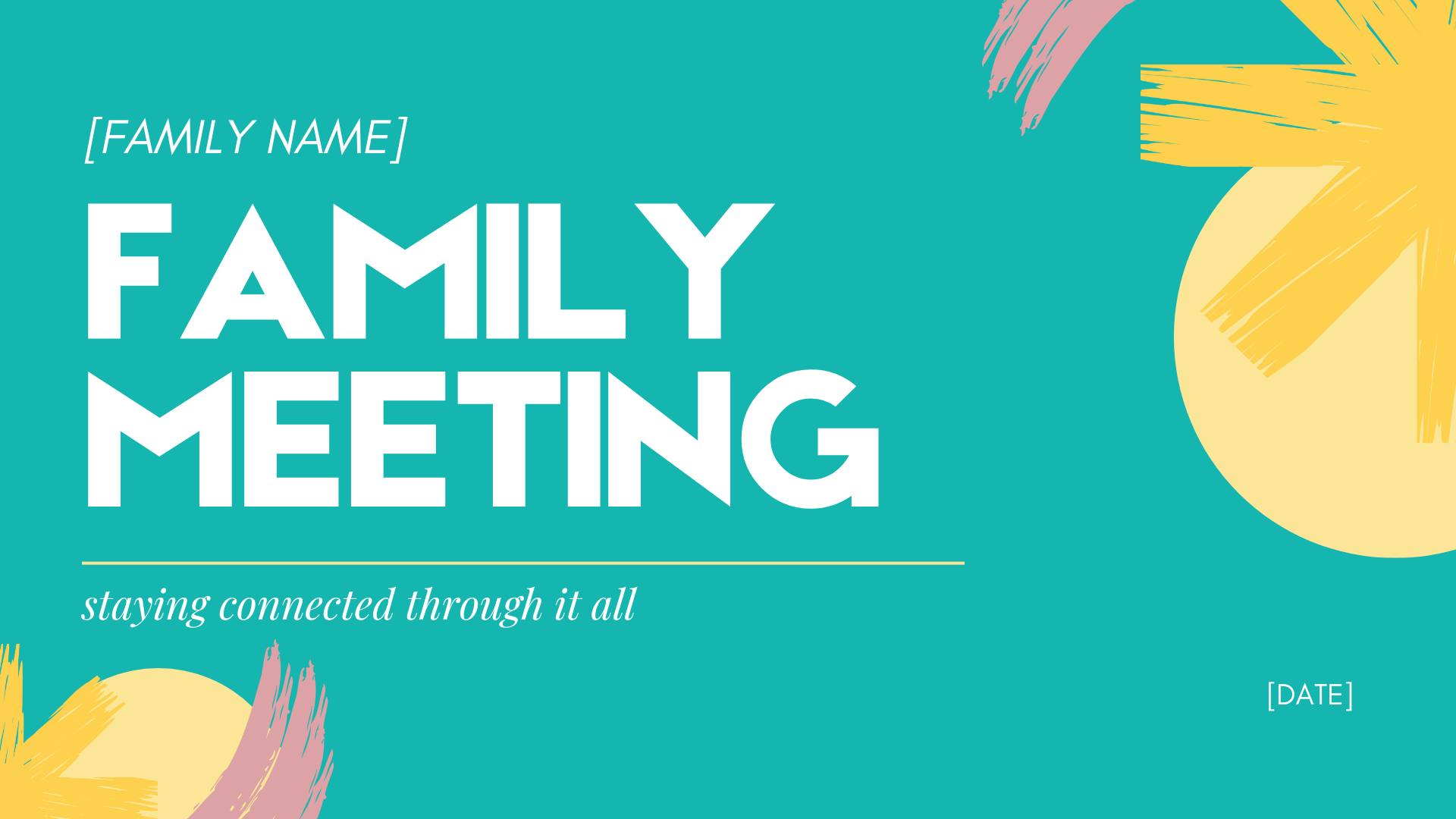
Title slide (add your family name)
Word of the Week (teaches values)
Rules of Engagement (sets expectations)
Last Week Recap (accountability)
This Week's Calendar (keeps everyone informed)
Discussion Prompts (guides conversation)
Goals (individual + family)
Chores/Responsibilities (clear expectations)
Family Announcements (celebrate together)
Closing (wrap up and look ahead)
-
You never run out of material
52 Words of the Week (full year covered)
Definitions written so kids understand
3 discussion questions per word (keeps conversation flowing)
Words include: Respect, Boundaries, Honesty, Courage, Empathy, Self-Control, Leadership, Perseverance, Integrity, Gratitude, and 42 more.
One word per week = your family meetings are planned for the entire year.
-
So you know exactly what to do
How to customize the template
How to run your first meeting
Weekly update checklist
Tips for keeping kids engaged
Troubleshooting guide
5-minute video walkthrough
Everything you need to feel confident and prepared.
-
For families who incorporate faith:
52 Bible verses matched to each Word of the Week
Just an extra layer if it fits your family

This System Works For:
✓ Parents who want intentional family time
✓ Families building strong values together
✓ Anyone tired of winging it with no structure
✓ Moms/Dads who need kids to LISTEN
✓ Families with two kids or 10 kids (it scales)
✓ Busy parents who don't have time to plan from scratch
✓ People who've tried family meetings and have given up
✓ Families who want meaningful conversations without the chaos
✓ Parents teaching respect, boundaries, and responsibility
✓ Anyone who wants a connection without the guesswork
How To Use This System:
STEP 1: Customize the template
Add your family name, choose this week's word from the 52-word bank, and update the calendar.
Takes 5-10 minutes.
STEP 2: Run your meeting
Gather your family (same time each week works best), display the presentation on your TV or laptop, go through the slides together.
Takes 20-30 minutes.
STEP 3: Repeat weekly
Pick a new word each week. Update the slides. Watch your family grow closer and more connected.
52 weeks of content = you're set for the year.
Just meaningful family time.

Hi, I'm Victoria
I'm a divorced mom of 5 kids (yes, FIVE).
I created this system because "let's just sit down and talk as a family" wasn't working.
The kids wouldn't engage. I'd forget what I wanted to cover. It felt forced and awkward. Someone always had an attitude or their phone out.
Then I started using a visual presentation for our family meetings.
Everything changed.
The presentation kept ME on track and kept THEM engaged.
We started having honest conversations about respect, boundaries, courage, accountability — the things that actually matter.
We've been holding weekly family meetings for over a year. We talk about real things. My kids actually participate—even the teenagers.
I've been asked about this system so many times that I finally packaged it.
If it works for my chaos, it'll work for yours.
— Victoria
Founder of Organize Design Create
Start Your Family Meetings This Week
Everything you need for a full year of meaningful family conversations
Get it today for $37
✓ 10-slide Canva presentation template (3 formats)
✓ 52 Words of the Week + discussion questions
✓ Complete instructions + video walkthrough
✓ Optional Bible verse guide
✓ Instant access (download immediately)
✓ Use this week
Instant download • Lifetime access • All sales final
Disclaimer:
This system works for most families, but it's important to be honest about limitations:
This is NOT therapy. If your child is struggling with clinical depression, trauma, severe anxiety, or behavioral disorders, please seek professional help first. This system can work alongside therapy, but it can't replace it.
This won't fix a deeply broken relationship overnight. If trust is completely shattered, you'll need patience, consistency, and possibly professional support. The system provides structure, but rebuilding relationships takes time.
This requires your commitment. If you can't show up consistently, don't buy this. Inconsistency breaks trust faster than no meetings at all.
That said: Most families aren't in crisis. Most kids aren't completely shut down. Most parents just need a framework that works. If that's you, this system will help.
If your child is naturally very quiet or non-verbal (and that's just their personality, not trauma), this system will require significant adaptation. You'll need to accept non-verbal participation, adjust your expectations, and respect their communication style. Some kids connect through actions, not words—and that's okay. This system can still work, but success will look different.
-
You have 3 options: a Canva template (easiest to customize), a PowerPoint file, and a PDF (for reference). Use whichever works best for you.
-
Yes. The template scales for families with 2 kids or 10 kids. You customize it for your specific family.
-
The words and discussions work for ages 5-18. You adjust the complexity of your explanations based on your kids' ages. Younger kids get simpler definitions, older kids can go deeper.
-
Immediately! You'll receive a download link via email within minutes of purchase. All files are ready to use right away.
-
No, this is a digital download. Nothing will be shipped. You get instant access to all files online.
-
Yes! With one child, family meetings become structured one-on-one connection time. Instead of a group discussion, it's focused parent-child time with purpose. The visual presentation keeps it from feeling like a lecture, the structure prevents awkward "So... how are you?" conversations, and the consistency builds a meaningful ritual. Many single-child families use this as their weekly "us time", predictable, intentional, and distraction-free.
-
It's not too late, but it requires a different approach. Be honest with them about why you're starting ("I miss really talking to you"), keep the first few meetings short (15 minutes max), focus on practical topics first (calendar, goals), and give them ownership of the format.
Teenagers will resist anything that feels forced or fake. But if you show up consistently, keep it short, and model vulnerability, they'll slowly engage. It might take 8-10 weeks to become normal, but it's worth it.
Many parents start family meetings when kids are young, but some of the most meaningful transformations happen when you start with teenagers because they can engage at a deeper level once they trust the process.
Frequently Asked Questions
-
No. You can use the Canva version (a free Canva account works), PowerPoint, or Google Slides—your choice.
-
No problem. Just pick up where you left off. The words don't have to go in order. Use what's relevant to your family when you need it.
-
Yes! In Canva, you can change colors with one click. The template comes in a teal/yellow/pink color scheme, but you can change it to match your style.
-
The visual presentation helps. Kids pay attention to screens. Start small — just 15 minutes. Make it fun. Let them help customize slides. Consistency is key. It gets easier after the first few weeks.
-
Due to the instant access nature of digital products, all sales are final. Please review the "What's Included" section carefully before purchasing to ensure this is right for your family.
-
Start small and be patient. Shut-down kids often avoid conversations because they feel pressured or don't know what you want from them. The meeting structure helps because it's predictable, time-bound, and focused on specific questions (not vague "how are you feeling?" conversations).
In the first few weeks, they might just sit there—that's okay. They're learning the rhythm. Let them listen. Let them give one-word answers. Don't force it.
Over time, the consistency builds trust. The visual presentation makes it less confrontational. The questions give them something concrete to respond to.
If your child is dealing with serious mental health issues, trauma, or crisis, please seek professional help. This system can complement therapy, but it's not a replacement for it.
-
It depends on why they're quiet. If they're introverted (need time to process before speaking), the system works great just give them processing time and let them write answers first. If they're non-verbal communicators (show love through actions, not words), you'll need to adapt, let them participate by advancing slides, customizing the presentation, or contributing non-verbally.
If your child is fundamentally opposed to any verbal sharing (not due to trauma or trust issues, just personality), this system may not be the right fit. Some kids connect through activities and presence, not conversation.
The good news: even quiet kids benefit from HEARING the discussions, watching you model communication, and learning the values, even if they don't share much themselves. Adjust your expectations, and it can still work.